Matted fur is more than a style problem for cats. When their coat clumps into tight knots, it can pull on the skin, hurt when they move, and make simple things like walking or stretching uncomfortable. That is why caring for mats the right way really matters for your cat’s comfort and health.
In this article, we explain what matting is, why it happens, and what a professional grooming visit looks like when mats are involved. We will also talk about how mobile cat grooming services help reduce stress, how you can prepare your cat, and what you can do at home to help prevent mats between visits.
Keep Your Cat Comfortable Even with a Matted Coat
Matting happens when loose hair, dirt, and natural oils tangle together and form tight clumps. It shows up a lot on long-haired cats, older cats that do not groom as well anymore, and cats that are overweight or have health issues that make self-grooming harder. Mats often start in common friction spots, like behind the ears, under the armpits, along the belly, and at the base of the tail.
Those clumps can:
- Pull on the skin every time the cat moves
- Make it painful to lie down or jump
- Hide rashes, bumps, wounds, or fleas
- Trap moisture and cause sore, tender spots
If mats are left alone, they usually get tighter and spread. As the weather warms up, a thick, matted coat can make your cat feel even hotter and more uncomfortable. Professional cat grooming services that come right to your home, like our mobile team at Honey Pets, make it easier to deal with mats before they become a big problem. Since the grooming happens in a quiet van parked outside, your cat avoids a stressful trip and can get relief from those mats in a calmer way.
Why Matted Cat Coats Need Professional Attention
It can be tempting to grab scissors and try to cut out a mat at home. The trouble is, cat skin is very thin and stretchy. Mats often sit right against the skin, so one small slip can lead to a nick or even a serious cut. Trying to pull or rip at a mat can also hurt a lot and make your cat scared of being touched.
Tight mats can also:
- Trap dirt, litter, and loose hair
- Hold moisture against the skin
- Give fleas or other pests a cozy hiding spot
- Turn into red, irritated, or infected areas
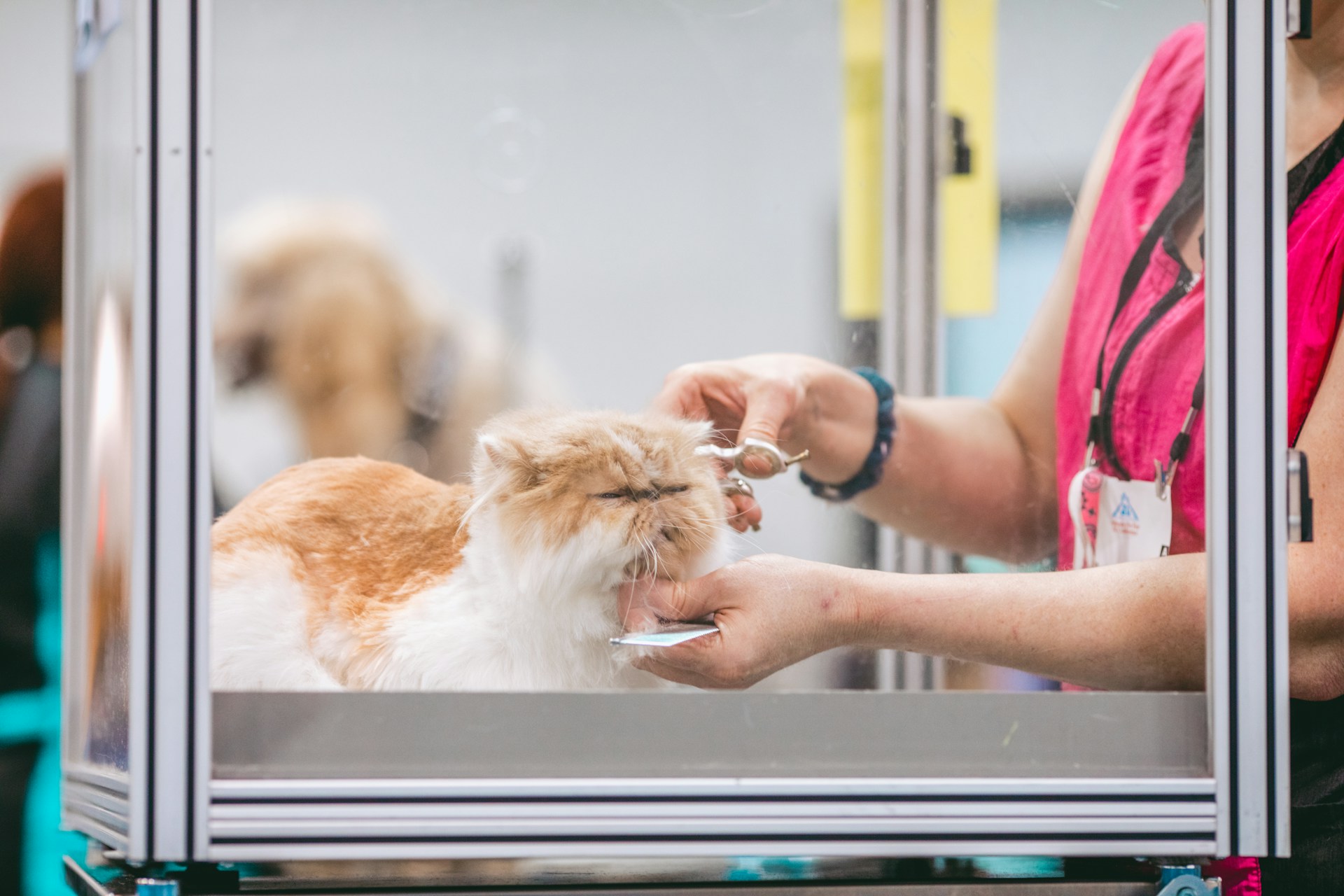
As temperatures rise, that trapped moisture and warmth can make skin problems worse. Trained groomers know how to tell the difference between loose tangles that can be brushed out and tight mats that are safer to shave. We pay attention to your cat’s body language, where the mats sit, and how close they are to the skin before choosing a method. Sometimes a gentle spot shave in a problem area is far kinder than trying to comb everything out.
What Happens During a Cat Grooming Session for Mats
A mobile grooming visit for a matted cat is designed to be calm and organized. When we arrive, we bring your cat into the grooming van, which has everything needed for a full grooming session in one small, controlled space. Before we start, we talk with you about where you have seen mats, any health concerns, and how your cat usually reacts to handling.
The grooming process usually includes:
- A gentle check of the coat and skin
- Feeling for hidden mats along the belly, chest, and legs
- Looking for redness, sores, or signs of pests
Once we understand the coat condition, we decide how to treat the mats. Options can include:
- Careful brushing and combing for mild tangles
- Spot shaving in areas that are tightly matted
- A full clip if the coat is badly matted all over
Comfort comes first, always. If brushing clearly hurts or the mats are too tight, we switch to shaving so we do not keep pulling on the skin. When the mat work is done, we may follow with a gentle bath if it is safe for your cat, then careful drying. We also handle other basics, such as:
- Nail trimming
- Ear cleaning
- Extra checking of areas that were under mats
If we see anything that looks like it needs medical attention, we describe it to you so you can share details with your vet.
How Mobile Cat Grooming Services Reduce Stress
Many cats do not like car rides, noisy waiting rooms, or sitting near barking dogs. That stress can make grooming harder on both the cat and the groomer. A mobile salon skips all of that. Your cat only has to go from your door to the van parked outside.
Mobile grooming is especially helpful for:
- Shy or nervous cats
- Senior cats with stiff joints and sore mats
- Cats that have had rough grooming experiences before
In the Honey Pets van, it is just your cat and the groomer. That one-on-one setup keeps things quieter and more predictable. The visit is usually shorter than a full trip to a salon, and when the grooming is done, your cat is back home right away. Being in familiar surroundings again helps them settle faster after the appointment, which is especially nice in areas with warm, humid weather like parts of North Carolina and Florida.
Preparing Your Cat for a Matted Coat Grooming Visit
A little planning can make grooming day easier for both you and your cat. Before your appointment, try to:
- Keep your cat in a small room so they are easy to find
- Avoid feeding a large meal right before the groom
- Gently trim nails if you feel safe doing so
You can also help your cat feel calmer by:
- Bringing them to the groomer in a secure carrier
- Lining the carrier with a favorite blanket or towel
- Keeping the home quiet while the groomer is there
After a grooming session for heavy mats, your cat’s coat may look different. You might see short or even bald patches where thick mats were removed. The skin under those mats can be pale, pink, or a little sensitive. Try to:
- Keep your cat indoors and out of strong sun
- Provide cozy bedding if temperatures are still cool
- Stop them from licking or scratching the shaved spots too much
With a little time, the fur will grow back, and your cat will usually feel much lighter and more comfortable.
Preventing Mats Between Professional Grooming Visits
Once your cat’s coat is back under control, the goal is to keep it that way. Regular brushing helps stop tangles before they turn into mats. Different coats need different routines. For example,
- Long-haired cats often need brushing several times a week
- Medium coats may do well with a few good sessions each week
- Short-haired cats still benefit from weekly brushing to catch loose hair
Tools that tend to work well for most cats include:
- Soft slicker brushes for lifting loose hair
- Metal combs designed for cats for checking close to the skin
- Gentle grooming gloves for very sensitive cats
Aggressive de-matting tools are not a good match for most people at home. It is easy to scratch the skin or pull too hard without meaning to. If you feel mats forming again, it is safer to bring in professional cat grooming services before they get too tight. Setting up regular grooming on a schedule that fits your cat’s coat, especially before heavy shedding seasons, can go a long way toward keeping them tangle-free and comfortable all year.
Give Your Cat a Stress-Free Grooming Experience at Home
Our gentle mobile grooming team comes right to your door, so your cat can stay calm and comfortable while getting the care they need. Explore our full range of cat grooming services to find the perfect fit for your pet’s coat, skin, and temperament. If you have questions or want to schedule an appointment with Honey Pets, simply contact us and we will help you get started.