Keep Your Long-Haired Cat Comfy, Safe, and Mat-Free
Long-haired cats are beautiful, but their coats can turn into a mess of knots faster than many people expect. As the year winds down and life gets busy with holidays and visitors, it is easy to miss small tangles that later turn into tight, painful mats. Those hidden clumps do more than ruin photos; they can pull on the skin, trap dirt, and make your cat feel grumpy and sore.
Regular, gentle grooming keeps your cat comfortable and helps you spot problems before they get serious. Good care also means your long-haired cat grooming before and after results are dramatic in the best way, with a softer, smoother coat. Our goal in this guide is to help you understand the difference between simple detangling and risky de-matting, when at-home brushing is safe, and when it is time to stop and let a professional cat groomer handle it.
Understanding Tangles vs. Painful Mats in Long-Haired Cats
Tangles and mats are not the same thing. Knowing which one you are dealing with can keep your cat safe.
Tangles are:
- Loose knots on the outer coat
- Soft and a bit fluffy
- Easy to move with your fingers
- Usually simple to brush out if you are gentle
Mats are:
- Dense, tight clumps of hair
- Often flat and feltlike against the skin
- Hard or solid when you pinch them
- Painful when moved or pulled
In warm states like California, Florida, Maryland, and North Carolina, long-haired cats often keep a thick coat all year. Around late fall, as schedules change and daylight shifts, many cats shed in bursts and grow extra undercoat. Add dry indoor air from fans or AC, less brushing, and more time lounging on furniture, and you get the perfect setup for tangles.
Common mat trouble spots include:
- Armpits and behind the front legs
- Behind the ears and under the chin
- Belly and inner thighs
- Around the tail and rear end
Cats that are overweight or have stiff joints may not reach all these places to clean themselves, especially under the belly and back legs. Breeds with silky or cottony coats, like Persians and Maine Coons, can mat even faster. When you pet your cat, soft clumps that slide over the skin are usually tangles. Hard, tight patches that seem stuck and pull the skin are mats, and those change how your long-haired cat grooming before and after results will look.
Safe Home Detangling for Long-Haired Cats
Home brushing is helpful when it is done gently and at the right time. Detangling at home is usually safe if:
- You only feel mild, soft tangles
- There is no redness, rash, or open skin
- Your cat stays mostly calm and does not cry or snap
- The brush moves through the fur with only light resistance
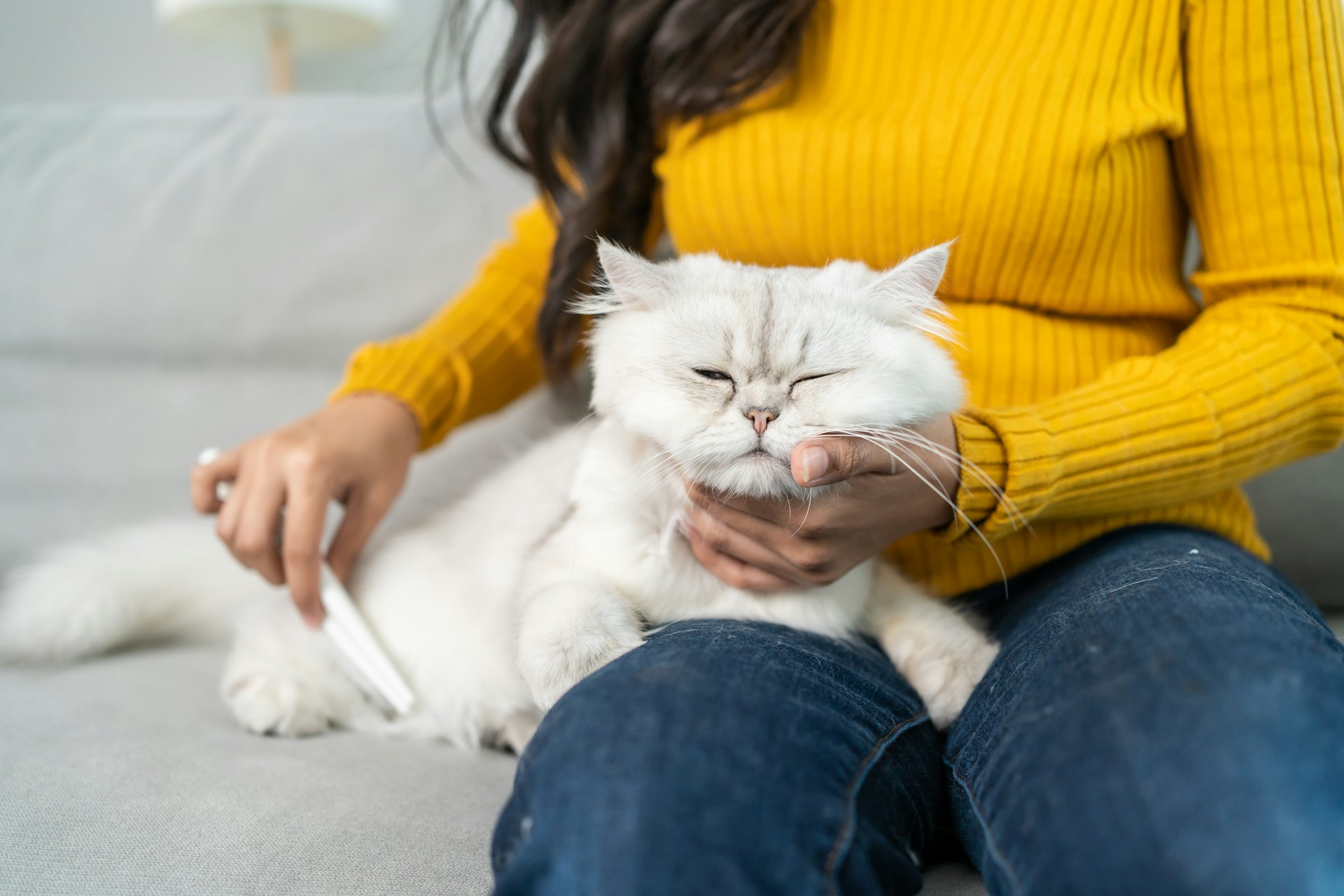
Basic tools that are kinder for long-haired cats include a soft slicker or pin brush and a wide-tooth comb. Start at the tips of the hair and slowly work toward the skin. Hold the fur between your fingers near the skin so the tug goes into your hand, not into your cat. If the hair does not move with gentle strokes, stop instead of pulling harder.
A simple home routine for long-haired cats:
- Short brushing sessions a few times a week
- Extra focus on armpits, belly, behind ears, and tail base
- Calm, quiet spot with treats and breaks
- End before your cat gets too annoyed
As the year slides toward the holidays and life gets busy, it helps to bump up brushing just a bit. Those small, steady grooming moments mean your long-haired cat grooming before and after photos show a shiny, flowing coat instead of a choppy fix for heavy mats later.
When De-Matting Becomes Dangerous at Home
De-matting is very different from simple detangling. Once tangles have tightened into real mats, home grooming can turn unsafe quickly.
Red flags that mean home de-matting is no longer a good idea:
- Mats feel tight against the skin and do not move
- Large areas are matted, like the belly, chest, or inner thighs
- You see redness, scabs, or bumps around the mats
- There is a bad odor coming from the matted area
Risky DIY methods can hurt your cat and make professional care harder. It is never safe to:
- Cut mats out with scissors
- Yank or rip out clumps of fur
- Soak mats in oils or strange products from online “hacks”
- Hold a fearful cat down for long, stressful grooming sessions
Watch your cat’s reactions. If your cat cries, growls, pants, flinches, or suddenly tries to bite during brushing, that is a clear sign of pain or high stress. Mats can also limit movement, so if your cat starts to walk stiffly, avoids jumping, or stops normal grooming or eating, it is time to stop home efforts. At that point, working on those mats yourself can cause skin tears, bruising, or fear of future grooming.
Professional Cat Grooming Solutions for Severe Mats
When mats are too much for safe home care, a professional cat groomer can step in and make the process calmer and safer. With mobile grooming, the salon comes right to your driveway, which is often easier on shy or senior cats than a busy grooming shop.
During a professional session for a matted cat, the groomer will:
- Gently check the coat and skin condition
- Decide where careful de-matting is safe and where it is not
- Use cat-safe tools that glide under or around small mats
- Keep sessions focused so your cat is not overwhelmed
There are two main paths for dealing with heavy mats. A de-matting session is used when mats are mild or in small areas, and some length can be saved without hurting the skin. A humane shave-down or close clip is used when mats are tight, wide, or right on the skin and combing them out would be painful or risky. It may look short at first, but this option lets the coat regrow healthy and clean.
Realistic long-haired cat grooming before and after results can be surprising. A cat that arrived with a lumpy, dull coat can leave with a smooth clip, fresh skin, and a lot more comfort. After the groom, a good professional will explain:
- How often to brush your specific cat
- Which tools fit their coat type
- What trouble spots to check weekly
- When to book the next maintenance groom to avoid new mats
This plan helps keep mats from coming back as the new coat grows in.
Seasonal Grooming Strategies for Cozy Winter Cats
Even in warm climates, the lead-up to winter still brings changes in your cat’s coat and routine. Days get shorter, holiday lights and guests come and go, and many cats curl up more in favorite spots. All that lounging can hide tangles in areas that press against beds, blankets, or furniture.
A simple seasonal grooming plan for long-haired cats:
- Do quick daily checks behind the ears, under the chin, armpits, belly, and tail base
- Brush a little more often with gentle tools, instead of one long session
- Watch for dry skin or dandruff, which can show under thick fur
- Run your fingers through the coat to feel for small clumps before they grow
Planning regular professional grooming before the holiday rush keeps your cat fresh for travel, visitors, or boarding. This is also when long-haired cat grooming before and after moments can be the most dramatic. A pre-holiday groom can change a slightly shaggy, starting-to-tangle coat into a silky, tangle-free one that is easier to maintain at home for weeks.
See the Difference a Professional Groom Can Make for Your Cat
If you are ready to transform your cat’s coat from matted and dull to soft, healthy, and beautiful, we are here to help at Honey Pets. Take a look at how our long-haired cat grooming before and after results can guide you toward the right services for your pet. When you are ready to book or have questions about what your cat needs, simply contact us and we will walk you through the next steps.