Support Your Long-Haired Cat for Grooming Success
Long-haired cats look like little clouds, but that pretty fur can turn into knots and tight mats faster than many people expect. Those mats are not just messy, they pull on the skin and can hurt when your cat moves or when anyone tries to brush them out. That is why long-haired cats do best with both recurring professional grooming and a steady at-home routine.
When you mix regular professional grooming visits with simple daily habits, you keep that long-haired cat grooming before-and-after glow for much longer. Your cat stays cleaner, softer, and more comfortable. A calm, predictable plan also means fewer surprises for you and less stress for your cat.
Thinking in months, not just random brush days, makes it easier to remember what to do and when. A month-by-month routine turns grooming from a battle into a normal part of home life and makes every professional grooming visit smoother, quicker, and kinder for your cat.
Know Your Cat’s Coat and Grooming Personality
Not all long-haired coats are the same. The way your cat’s fur feels will change how often you should brush and which tools work best.
Here are three common long-haired coat types:
- Silky coat: Soft, flowing fur that feels light and smooth. It looks pretty but can form fine tangles behind the ears, under the collar area, and on the back of the legs.
- Dense coat: Thick fur with lots of undercoat. It sheds more and can clump in the armpits, belly, and tail base.
- Woolly coat: Fluffy, cotton-like fur. It tends to grab onto itself, so it mats fast, even if the hair does not look very long.
You can gently run your fingers through your cat’s fur to see where it snags. That tells you where mats are likely to show up between appointments.
Personality matters too. Think about your cat’s grooming style:
- Shy: Hides or pulls away when you bring out brushes. Needs very short, quiet sessions.
- Wiggly: Tolerates grooming but squirms and tries to escape. Needs more breaks and a steady hand.
- Confident: Stays calm, may even lean into the brush. Can handle longer sessions and more areas at once.
Let your cat’s mood set the pace. A shy cat might need 1 or 2 minutes at first, while a confident cat can handle more. For tools, build a small, simple kit:
- Soft slicker brush or pin brush made for cats
- Stainless steel comb with both wide and fine teeth
- Gentle dematting tool for surface knots only
- Cat nail clippers
- Cat-safe wipes for small cleanups
Keep everything in one bin so grooming time feels clear and organized.
Build a One-Month Routine Before the First Professional Groom
If your cat has never had professional grooming before, use the month before the first visit to train and prepare.
Week 1: Start super small
- Do 2- to 5-minute sessions once a day.
- Brush easy spots only, like the back and sides.
- Offer a treat or a play reward after each session.
The goal this week is not to remove every tangle. It is to teach your cat that brushing time means good things.
Week 2 and 3: Add new areas slowly
- Brush every other day.
- Start using the comb in common problem zones: armpits, belly, behind ears, and around the tail base.
- Gently touch and hold each paw for a second or two, then give a treat.
- Lightly handle the tail, from base to tip, without pulling.
If your cat fights or swats, stop, go back to an easier spot, and end with a happy moment. Little wins add up.
Week 4: Mini spa days
Once a week, do a slightly longer session:
- Full-body brush-through with the brush, then the comb.
- Quick nail check, even if you only trim one or two nails.
- Calm carrier time, with the door open at first, then closed for a short bit as your cat relaxes.
This routine helps your cat accept touch, tools, and the idea of being in a contained space, which makes future grooming experiences much easier.
Month-by-Month Care Between Recurring Grooming Visits
After your cat’s first professional grooming, the real magic is what you do at home between appointments.
Months 1 and 2 after a groom
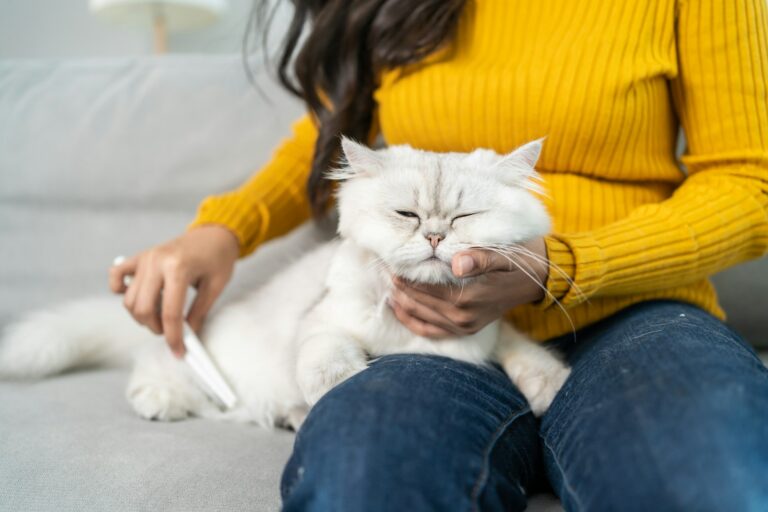
- Brush 3 to 4 times a week. The coat is shorter and smoother now, so this step is fast.
- Focus on friction spots where movement causes tangles: armpits, belly, behind ears, inner thighs, and tail base.
- Use the comb once or twice a week just to check for tiny knots.
Months 3 and 4 after a groom
As fur gets longer, mats form faster.
- Do quick checks almost every day, even if you only comb one area.
- Use the comb to find hidden knots close to the skin.
- If you feel a small tangle, gently work it from the ends toward the skin, never yanking.
Seasonal changes can affect the coat too. Dry indoor air in cooler months can mean more static and loose hair. Offering fresh water in more than one spot and using a soft brush regularly can keep the coat more comfortable between grooming visits.
Prevent Mats with a Weekly Home Spot-Check System
A simple head-to-tail check once a week can stop most mats before they start. You can follow the same pattern each time:
- Cheeks and ruff around the neck
- Behind the ears
- Armpits and chest
- Belly and inner thighs
- Tail base and top of the tail
- Under the tail, checking gently around the rear
Use your fingers first to feel for little bumps or rough spots, then follow up with the comb. For tiny tangles:
- Lightly mist with a cat-safe detangling spray if a groomer has okayed one for your cat.
- Hold the fur just above the tangle so you do not pull the skin.
- Comb from the ends of the hair toward the root in small strokes.
If the knot is tight, close to the skin, or your cat gets upset, stop. That is a job for a professional groomer, not a home trim. Trying to cut out mats at home can easily nick the skin.
Watch for behavior changes too. These can be red flags for painful mats or skin issues:
- Sudden flinching or growling when you touch a certain spot
- Excessive licking or chewing in one area
- Hiding more, moving stiffly, or avoiding being picked up
When you see those signs, let your groomer know so they can take a careful look during the next visit.
Maximize Long-Haired Cat Grooming Before and After Results
Most long-haired cats do best with professional grooming every 6 to 10 weeks, depending on coat type and how quickly mats form. Your month-by-month at-home plan fills the gap between those spa days.
Consistent home care leads to:
- Gentler grooming sessions with fewer snags
- Less need for shave-downs to remove severe mats
- More dramatic long-haired cat grooming before and after photos, since the coat can be styled instead of rescued
Before each appointment, make a quick note of anything you have seen at home:
- New trouble spots where tangles form again and again
- Any changes in how your cat reacts to brushing or touch
- Shedding patterns or flakes on the skin
Sharing this with your groomer helps them plan the visit, pick the right tools, and focus extra attention where your cat needs it most. Over time, that teamwork keeps your long-haired friend comfortable and fluffy, without the stress and pain of serious mats.
See the Difference Professional Grooming Makes For Your Long-Haired Cat
If you are ready to see a real long-haired cat grooming before and after transformation, we are here to help your feline look and feel their best. At Honey Pets, we tailor every groom to your cat’s coat type, temperament, and health needs so the experience is as comfortable as possible. Schedule your appointment today or contact us with any questions about our grooming services.